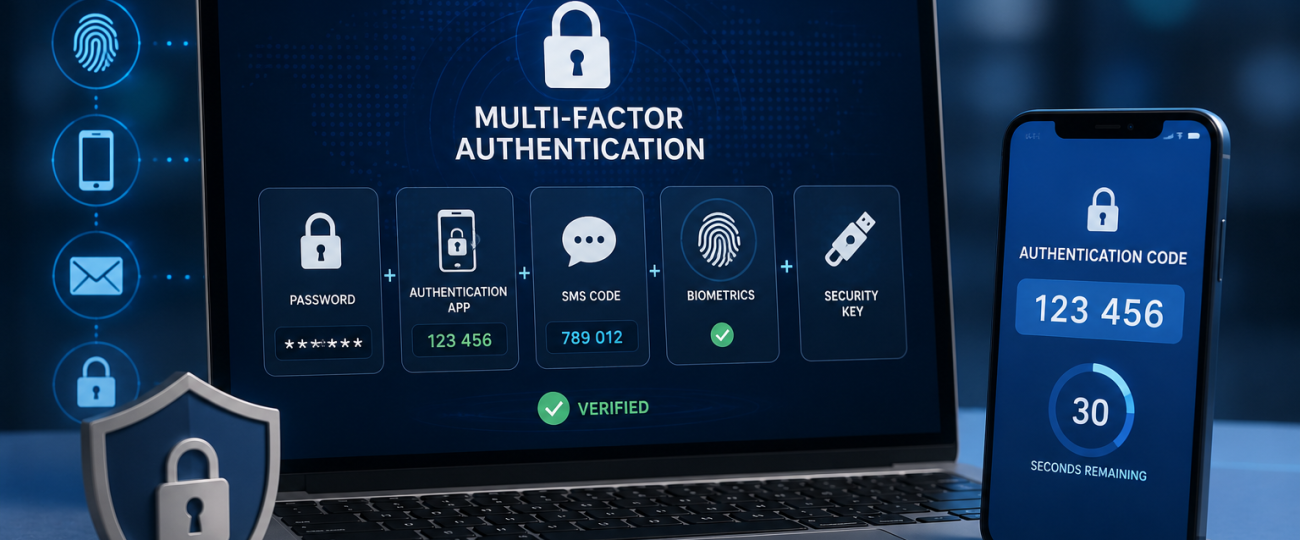

The days of passwords being adequate for online security are behind us. The cyber landscape is expected to become more sophisticated in 2026, so there’s a need for businesses and individuals to better secure sensitive data. This is where Multi-Factor Authentication (MFA) can really help.
To use MFA, users must log in with two or more authentication methods to access an account. If a hacker gets a password, they still need to have the second verification factor, making it much harder to get into.
When it comes to picking which MFA solution is best for your organization, this guide covers the top 10 Multi-Factor Authentication solutions for 2026 and why they are the best.
Why Is Multi-Factor Authentication Important in 2026?
Phishing, credential stuffing, and malware are all methods cybercriminals are using daily to steal logins. If you simply use a password, it can be easily guessed, but if you add a second layer of verification, you have much less of a problem.
Today, MFA solutions also enable remote working, cloud application security, and regulatory compliance, and can safeguard against unauthorised access to critical systems.
What Makes the Best Multi-Factor Authentication Solution?
An MFA solution should offer more than just passcodes that are used once. They should provide high security features and make login simple for users.
Some of the criteria to keep an eye out for are:
- Passwordless authentication
- Biometric login support
- Push notifications
- Adaptive or risk-based authentication
- Single Sign-On (SSO) integration
- Easy management dashboard
- Cloud and on-premises flexibility
So, what is the best multi-factor authentication solution for users of Microsoft?
For organizations already leveraging Microsoft 365 or Azure, Microsoft Entra ID is a great option. It provides passwordless authentication, biometric verification, conditional access policies, and can integrate with Microsoft’s cloud services. Its enterprise-level security and centralized identity management are favored by businesses.
So, why is Okta Adaptive MFA so popular?
Okta is known for its intelligent adaptive authentication. It does not require users to verify each time, but it evaluates user characteristics such as location, device, and user login behavior. If it’s detected that there is something suspicious, then more authentication is needed. This will further enhance both security and user experience.
Is Duo Security One of the Best MFA Solutions?
Yes. Easy deployment and simple use by employees make Duo Security one of the most trusted authentication platforms available. It can be used with mobile push notifications, biometrics, hardware tokens, and device health checks and is ideal for all businesses regardless of size.
So, why should businesses consider Cisco Secure Access?
Cisco is integrating ZTA security principles with MFA. Checks all user logins before allowing access to applications and networks. A centralized security management system, detailed reports, and more robust security against unauthorized access are just a few advantages organisations gain from the use of a centralized network security management system.
Does Ping Identity Make a Good Large Enterprise Solution?
Ping Identity is developed for companies that demand flexible identity management throughout a number of cloud platforms. It enables adaptive authentication, passwordless login, identity federation, and Single Sign-On, making it an excellent choice for enterprise environments.
What are some of the reasons that many financial institutions use the RSA ID Plus service?
RSA has a long history of excellence in digital security. RSA ID Plus is used for cloud authentication, biometric verification, hardware tokens, and mobile authentication. It is widely used by banks, healthcare institutions, and government agencies due to its robust security features.
Is OneLogin right for developing businesses?
OneLogin integrates IMS and MFA into a single solution. It enables employees to access business applications and provides IT administrators with total control of the authentication policies. It also saves administrative efforts through its automation capabilities.
What is causing the increase in JumpCloud’s popularity?
Small and medium-sized businesses are particularly drawn to JumpCloud. It merges cloud directory services, device management, and MFA on a single platform. It is also very flexible, supported by Windows, macOS, Linux, and Cloud applications, ideal for modern workplaces.
Is Auth0 a good alternative for MFA for Developers?
Auth0 is popular among software developers due to its highly customizable authentication systems for websites and mobile applications. It enables passwordless authentication, adaptive MFA, social logins, biometric authentication, and offers a wide range of API support.
Is it possible for LastPass Business to Enhance Authentication Security?
Yes. LastPass Business is a password manager and more. It also provides secure Multi-Factor authentication, push notifications, codes, and Biometrics. LastPass users who are already in business can easily enhance account security without having to deploy yet another authentication platform.
How to select the best MFA solution?
Depending on your organization, your needs, and your budget, there is a solution that can work for you. Before choosing one, think about how easy it is to install it, how well it integrates with your current software, what devices it supports, how scalable it is, how easy it is to adhere to compliance, and how user-friendly it is.
What is the Final Verdict?
Best Multi-Factor Authentication solutions 2026 go beyond just login verification. They integrate seamless application integration, offer adaptive risk analysis, biometric security, and passwordless authentication to offer higher security against today’s cyber threats.
Even if you have a small business or a large enterprise, or just want to improve the security of your accounts, it is one of the best investments in cybersecurity you can make is to put a trusted MFA solution in place. Selecting the right platform can ensure the security of sensitive information, mitigate security risks, and ensure readiness for the evolving digital landscape.